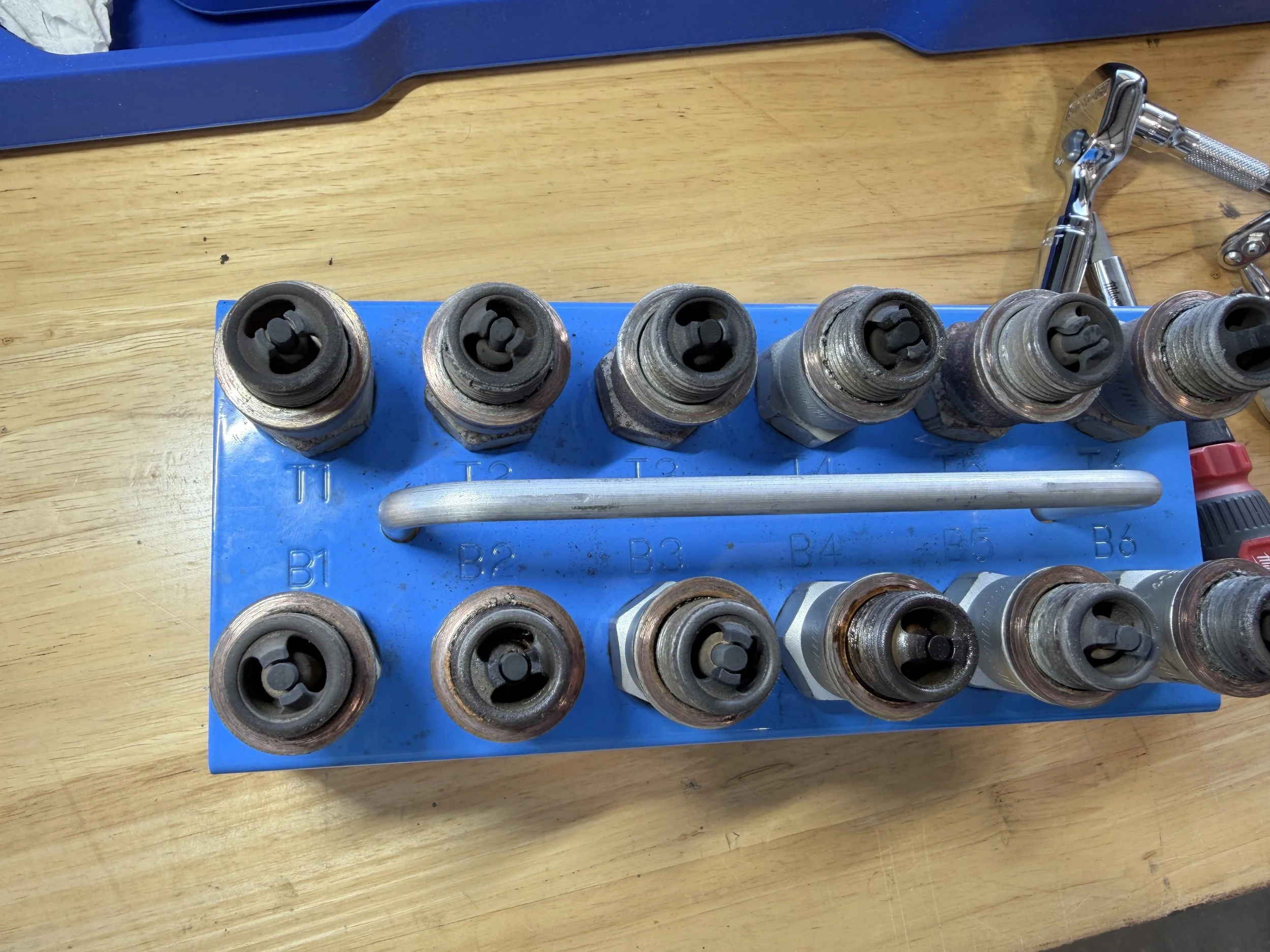
In a piston aircraft engine, few components play a bigger role than the spark plug. These small but powerful parts are responsible for igniting the fuel-air mixture that keeps your engine running smoothly and safely. Understanding how they work—and what they can reveal—can help aircraft owners make smarter maintenance decisions and catch potential issues early.
How Spark Plugs Work
Most general aviation aircraft use two spark plugs per cylinder, connected to independent magnetos for redundancy and safety. When the magneto sends an electrical charge, the spark plug creates a spark across a small gap at its tip. This spark ignites the fuel-air mixture inside the cylinder, creating the controlled explosion that drives the piston and produces power.
This process happens thousands of times per minute during flight, making spark plugs one of the hardest-working parts on your aircraft.
Why Spark Plugs Matter
Healthy spark plugs help ensure:
Smooth engine operation
Efficient fuel combustion
Reliable starting and performance
Reduced risk of fouling or misfires
Worn or dirty spark plugs can lead to rough running, hard starts, reduced power, and increased fuel consumption—issues that can affect both safety and operating costs.
What Spark Plugs Can Tell You About Engine Health
One of the most valuable aspects of spark plugs is what they reveal during inspection. A trained mechanic can “read” a spark plug much like a doctor reads vital signs. For example:
Black, sooty deposits may indicate a rich mixture or excessive idling
Oily residue can point to oil control issues
White or blistered electrodes may signal overheating or improper combustion
Uneven wear can hint at ignition or cylinder-specific problems
These clues help identify small concerns before they become costly repairs.
Keeping Your Spark Plugs in Top Shape
Regular cleaning, rotation, and proper gapping during routine maintenance and annual inspections can significantly extend spark plug life and improve engine performance. It’s a simple step that pays big dividends in reliability and peace of mind.