

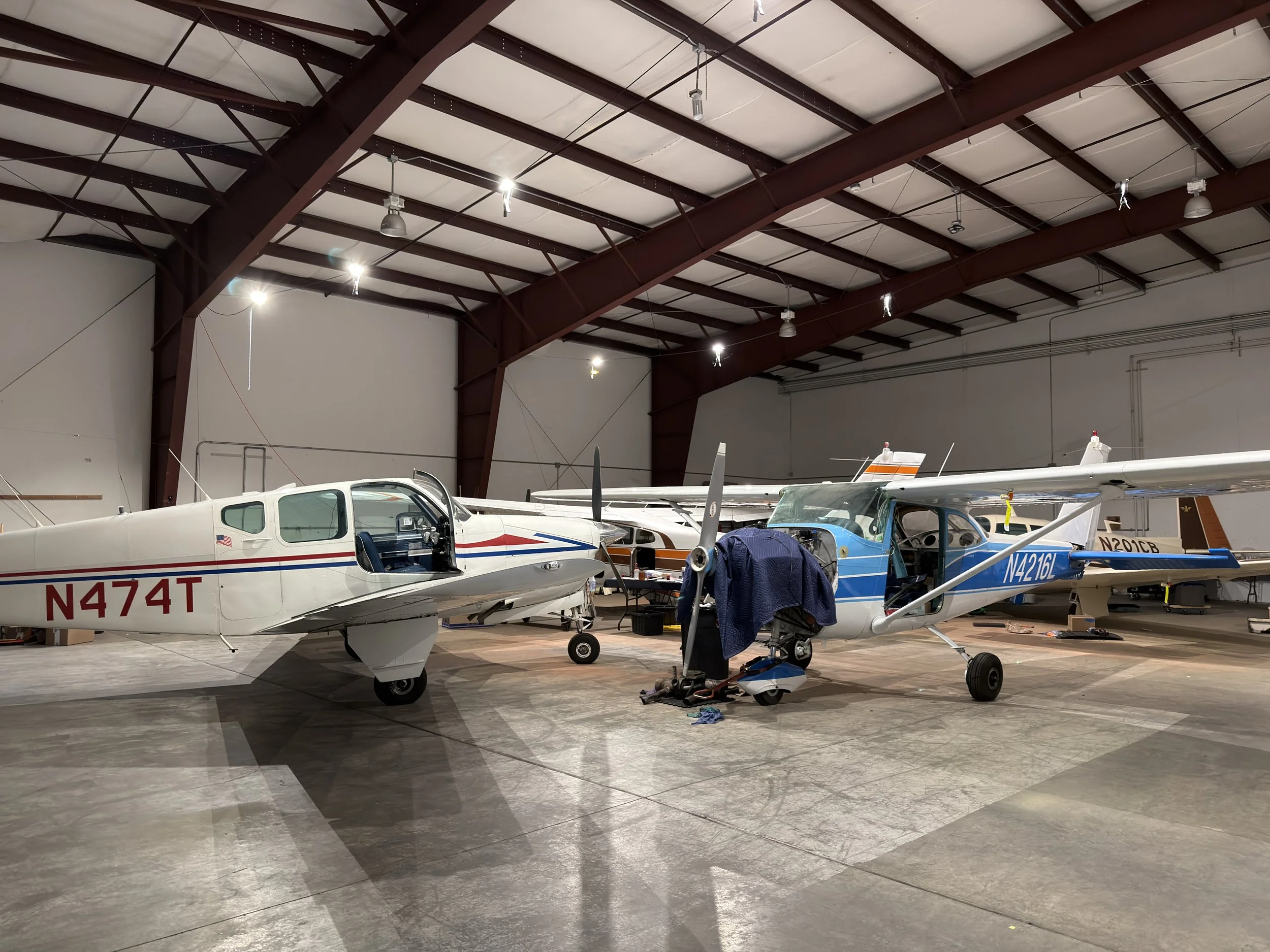
As aircraft owners, we all understand that maintenance is one of the biggest ongoing expenses of ownership. When schedules get busy or an unexpected repair comes up, it can be tempting to postpone a maintenance item until the next annual inspection or “when there’s more time.”
While that may seem like a money-saving decision in the short term, delaying maintenance often leads to significantly higher costs—and in some cases, unnecessary downtime or safety concerns.
Let’s take a closer look at what waiting can really cost.
Small Problems Rarely Stay Small
Aircraft are designed to withstand thousands of hours of operation, but every component has a service life. A worn belt, minor oil seep, loose exhaust clamp, or aging hose might not seem urgent today, but those seemingly minor discrepancies can become major repairs if left unaddressed.
For example:
A small oil leak can contaminate surrounding components and hide larger issues.
Worn tires can become unsafe during takeoff or landing and may cause additional wheel damage.
A deteriorating baffle seal can lead to higher engine temperatures, reducing engine longevity.
Aging hoses can crack internally long before obvious external damage appears.
Addressing these items early is almost always less expensive than repairing the damage they eventually cause.
Increased Aircraft Downtime
Many owners delay maintenance because they don’t want their aircraft out of service.
Ironically, waiting often leads to even longer downtime.
A simple repair completed during scheduled maintenance may take only a few hours. If that same issue progresses into a component failure, it could require extensive troubleshooting, replacement parts, inspections, and waiting on parts availability—keeping your aircraft grounded for days or even weeks.
Preventive maintenance helps you fly more and spend less time waiting for repairs.
Higher Repair Costs
The longer a discrepancy exists, the more likely it is to affect neighboring systems.
Think of it like ignoring a small roof leak in your home. The repair may start as replacing a few shingles, but months later you’re replacing insulation, drywall, and structural wood.
Aircraft are no different.
A worn bearing can damage surrounding assemblies. A loose fastener can create vibration that affects multiple components. Corrosion can spread beneath paint or inside structures before it’s ever visible from the outside.
Repair costs tend to multiply—not because the original problem was expensive, but because it was allowed to grow.
Safety Is Always the Priority
Maintenance isn’t just about protecting your investment—it’s about protecting everyone on board.
Many mechanical issues develop gradually. Catching them during routine inspections gives mechanics the opportunity to correct them before they become operational concerns.
Routine maintenance allows technicians to identify wear patterns, corrosion, loose hardware, fluid leaks, and developing engine issues before they impact reliability or safety.
Protecting Aircraft Value
Well-maintained aircraft consistently command higher resale values.
Prospective buyers pay close attention to maintenance records. Complete logbooks, timely inspections, and documented repairs demonstrate that the aircraft has been cared for throughout its life.
Deferred maintenance often raises questions during a pre-buy inspection and can become a negotiation point that reduces the aircraft’s value.
The Value of Preventive Maintenance
The goal of preventive maintenance isn’t to replace parts unnecessarily—it’s to identify issues before they become expensive failures.
Regular inspections help:
Reduce unexpected repair bills
Improve dispatch reliability
Minimize aircraft downtime
Extend component life
Maintain resale value
Increase confidence every time you fly
Final Thoughts
Aircraft ownership is an investment, and maintenance is one of the best ways to protect it.
Delaying maintenance may seem like a way to save money today, but it often results in larger repair bills, longer downtime, and greater inconvenience down the road.
At Pacific Aviation Solutions, we believe in helping aircraft owners make informed maintenance decisions. Our goal is to catch small issues before they become major repairs, keeping your aircraft safe, reliable, and ready for your next flight.
Whether you’re due for an annual inspection, troubleshooting a concern, or simply want a second opinion, we’re here to help keep you flying with confidence.
