

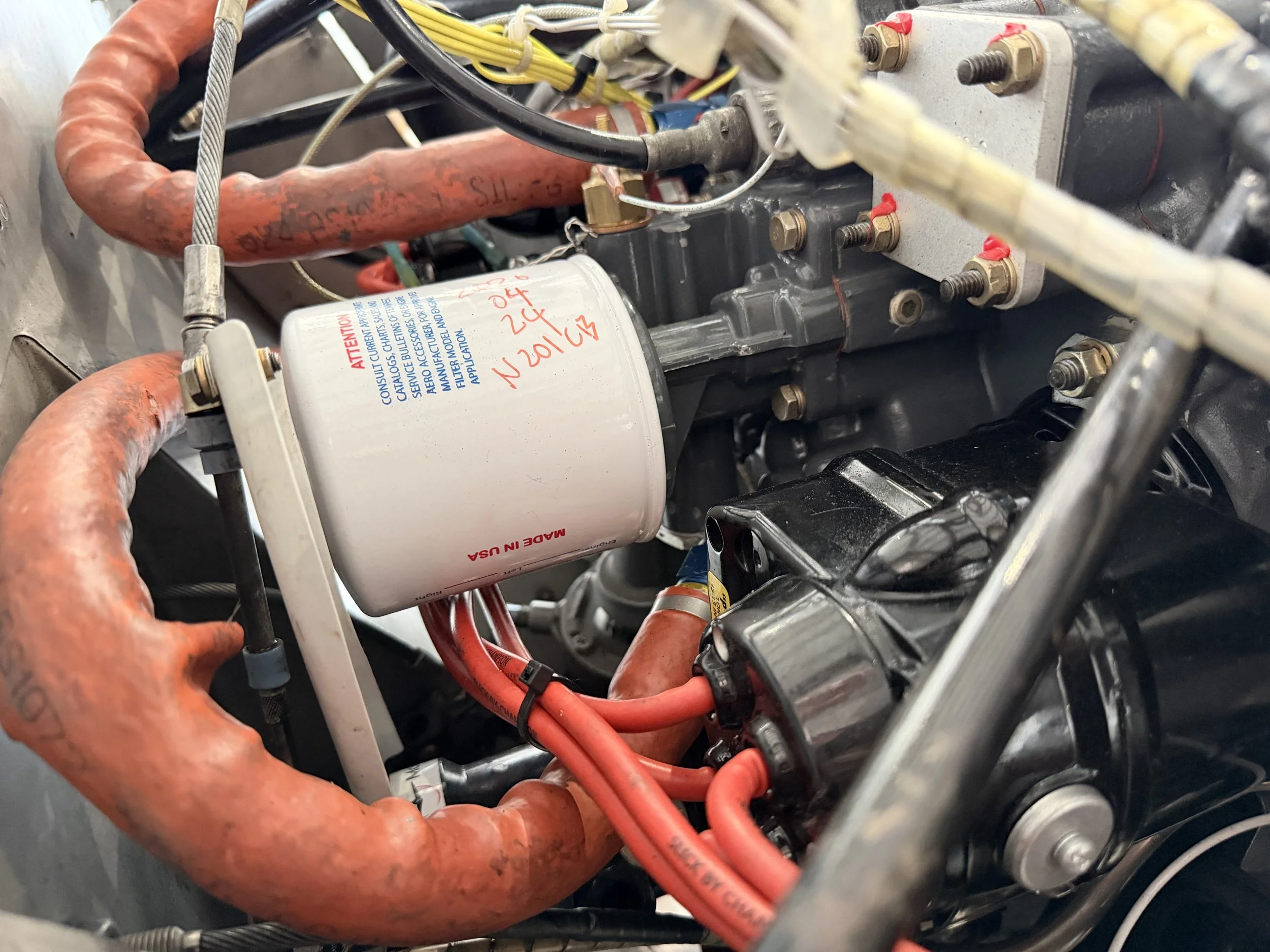
Engine oil is the lifeblood of any piston aircraft engine. Whether powering a Cessna 172, Piper Cherokee, or Beechcraft Bonanza, clean oil is essential to engine longevity and reliability. One of the most overlooked differences among general aviation aircraft is how contaminants are removed from that oil. Some engines rely on traditional oil screens, while others use full-flow spin-on oil filters. Understanding the differences can help owners make informed maintenance decisions.
What Is an Oil Screen?
An oil screen is essentially a metal mesh strainer designed to catch larger particles circulating through the engine. Oil screens have been used since the early days of aviation and remain installed on many older Lycoming and Continental engines.
Unlike disposable filters, oil screens are removed, cleaned, and reinstalled during maintenance. They are durable, simple, and inexpensive because they do not require replacement elements.
Advantages of Oil Screens
Simple design with no disposable components.
Lower maintenance cost.
Easy to inspect and clean.
Proven reliability over decades of service.
No concern about filter collapse or bypass valve failures.
Limitations of Oil Screens
The biggest drawback is filtration efficiency. Typical oil screens capture relatively large particles, allowing smaller contaminants to continue circulating through the engine. While these tiny particles may not cause immediate damage, they contribute to normal wear over time.
Oil screens also provide less information about internal engine health because the collected material can be difficult to analyze compared to the contents of a paper oil filter.
What Is a Full-Flow Oil Filter?
A spin-on oil filter functions much like the filter found on an automobile. Oil passes through a pleated paper element that traps significantly smaller particles before the oil returns to the engine.
Many general aviation aircraft have been upgraded with aftermarket filter adapters that allow the installation of spin-on filters. These conversions are common and are available for numerous Lycoming and Continental engines.
Advantages of Oil Filters
Capture much smaller particles than screens.
Provide cleaner oil throughout engine operation.
Help reduce long-term engine wear.
Allow mechanics to cut open and inspect the filter element.
Make early detection of internal problems easier.
Limitations of Oil Filters
Higher maintenance cost due to replacement filters.
Slightly more complex system.
Require proper installation and torque procedures.
Add a small amount of weight.
Why Mechanics Like Cutting Open Oil Filters
One of the most valuable aspects of a spin-on filter is what it reveals during an oil change.
When a mechanic cuts open a filter, the pleated media can be spread apart and inspected for:
Steel particles from cylinder or gear wear.
Aluminum from pistons or crankcases.
Bronze or brass from bearings and bushings.
Carbon deposits and other contaminants.
Finding abnormal metal early can prevent a minor issue from becoming a catastrophic engine failure. An oil filter essentially acts as a record of what has been happening inside the engine since the previous oil change.
Oil screens can also be inspected, but they generally collect fewer particles and provide less material for analysis.
Which System Filters Better?
From a purely technical standpoint, a full-flow oil filter is superior. The paper element captures particles far smaller than a metal screen, resulting in cleaner oil and potentially reduced engine wear.
That does not mean engines equipped with oil screens are unreliable. Thousands of aircraft have safely accumulated tens of thousands of hours using screens alone. Proper oil changes, regular operation, and engine monitoring remain far more important than the type of filtration system installed.
A Mechanic's Perspective
Ask most experienced A&P mechanics which system they prefer, and the majority will choose a full-flow oil filter.
Their reasons are straightforward:
Cleaner oil means less abrasive material circulating through the engine.
Filter inspections provide a valuable diagnostic tool.
Early detection of metal contamination can save owners thousands of dollars.
Spin-on filters make oil changes cleaner and easier.
For these reasons, many mechanics recommend installing an oil filter conversion when available for a particular engine model.
Is an Oil Filter Conversion Worth It?
For owners of aircraft still operating with oil screens only, adding a spin-on filter is often considered one of the most beneficial upgrades available. The cost of the conversion is relatively modest compared with the price of an engine overhaul, and the improved ability to monitor engine health provides additional peace of mind.
The Bottom Line
Oil screens represent a simple and time-tested design that has served general aviation well for decades. However, modern full-flow oil filters offer better filtration and provide mechanics with a powerful tool for detecting engine problems before they become serious.
From a maintenance standpoint, most A&P mechanics would agree: if your engine can accept a spin-on oil filter, it is generally the preferred option. Cleaner oil, better diagnostics, and improved protection make it a worthwhile investment for many aircraft owners.
As with any maintenance decision, owners should consult their A&P mechanic and review applicable STCs and manufacturer guidance for their specific engine and airframe combination.
